






Choosing an international school is a decision that goes far beyond comparing buildings, facilities or school fees.
For parents in Tunis and surrounding areas, the real question is:
Which school can provide the right educational environment for my child today — while preparing them for tomorrow?
There are several international and bilingual schools in Tunisia, with different curricula, languages, academic pathways and educational philosophies.
Some offer Cambridge programmes. Others combine international curricula with national programmes or different educational systems.
This guide explains the most important factors to consider when comparing an international school in Tunis, particularly if you are considering a Cambridge education.
1. Start With the Curriculum
The curriculum is one of the first things parents should investigate.
A school may describe itself as “international”, but that does not necessarily mean that every school follows the same educational programme.
Ask:
- Which curriculum does the school follow?
- Which organisation provides the curriculum?
- Which qualifications do students receive?
- At what ages are the programmes available?
- Is there a clear progression between school stages?
Why the Cambridge Curriculum Matters
The Cambridge Pathway covers education from approximately age 3 to 19.
Its five stages are:
Cambridge Early Years
→ Cambridge Primary
→ Cambridge Lower Secondary
→ Cambridge Upper Secondary / IGCSE
→ Cambridge Advanced / A Levels
For families looking for continuity, this structure can provide a clear educational progression from the early years through secondary and pre-university education.
Explore the Cambridge Curriculum at OIST
2. Consider the Language of Learning
Language is particularly important when choosing an international school in Tunisia.
Parents should look beyond the question:
“Does the school teach English?”
A better question is:
“How is English used throughout the student’s daily academic experience?”
An English-medium environment means that students use English not only during English lessons but as a language for learning, communication and academic development.
For younger children, this can mean developing confidence through everyday interaction.
As students progress, English becomes increasingly important for:
- Reading
- Writing
- Mathematics
- Science
- Research
- Academic discussion
- Examination preparation
At OIST, the Cambridge pathway is delivered within an English-medium international school environment.
3. Look at the Complete Educational Pathway
A school may be a good choice for a child at one particular age but offer fewer options later.
This is why parents should look at the entire educational journey.
Ask yourself:
Where does my child start?
Early Years?
Primary?
Lower Secondary?
Where can they progress?
IGCSE?
A Levels?
What happens after that?
University?
International higher education?
A strong long-term pathway can make transitions easier for students and families.
At OIST, the educational journey can progress through:
Early Years
↓
Cambridge Primary
↓
Cambridge Lower Secondary
↓
Cambridge IGCSE
↓
Cambridge International AS & A Levels
↓
Higher Education
4. Understand What Students Actually Learn
A curriculum should not be judged only by the names of its qualifications.
Parents should ask what students actually develop through their learning.
At Cambridge Primary, students build foundations in areas such as:
- English
- Mathematics
- Science
- Computing
- Languages
- Creative learning
- Physical education
As students progress towards IGCSE and A Levels, learning becomes increasingly specialised.
Students develop abilities such as:
Critical Thinking
Examining information, evidence and different perspectives.
Problem-Solving
Applying knowledge to unfamiliar situations.
Analysis
Identifying relationships, patterns and meaning.
Communication
Expressing ideas clearly and effectively.
Independent Learning
Taking increasing responsibility for academic work.
These skills become particularly important as students prepare for higher education.
5. Investigate the Teachers
A curriculum is only as effective as the people delivering it.
When visiting an international school, parents should ask about:
- Teacher qualifications
- Teaching experience
- Subject expertise
- Professional development
- Experience with international curricula
- Student-teacher relationships
- Academic support
The school website can provide useful information, but a school visit can tell you much more.
Observe how teachers interact with students.
Ask whether students feel comfortable asking questions.
Look at whether classrooms encourage participation rather than passive learning.
6. Look Beyond Academic Results
Academic achievement matters.
But a child’s education is about more than examination grades.
Parents should also consider whether the school provides opportunities for students to develop:
- Confidence
- Creativity
- Communication
- Leadership
- Collaboration
- Responsibility
- Resilience
- Personal interests
At OIST, learning beyond the classroom can include activities such as:
- Robotics
- Science activities
- Arts
- Music
- Drama
- Sports
- Clubs
- Educational trips
- Student leadership
These experiences can complement academic learning and help students discover interests outside traditional subjects.
7. Explore the School Environment
The physical environment can influence a child’s daily experience.
When visiting a school, look beyond whether the campus looks impressive.
Ask:
Does the environment feel welcoming?
Are classrooms designed for active learning?
Are students comfortable and engaged?
Are specialist facilities available where appropriate?
Parents may want to explore areas such as:
- Classrooms
- Science laboratories
- Library
- Technology spaces
- Sports areas
- Arts facilities
- Outdoor spaces
- Student common areas
The goal is not to find the most impressive building.
It is to find an environment where students can learn effectively.
8. Understand Student Support
Every student learns differently.
A good international school should have a clear approach to supporting students academically and personally.
Parents can ask:
- How is student progress monitored?
- What happens when a student needs additional support?
- How are parents informed about progress?
- How does the school support student wellbeing?
- How are individual learning needs considered?
These questions can be particularly important when moving from one educational system to another.
9. Ask About Admissions
International school admissions can vary significantly between schools.
Before applying, ask about:
Age and Year-Group Placement
How is the student’s year group determined?
Academic Records
Does the school require previous school reports or transcripts?
Entrance Assessment
Is an academic or English assessment required?
Interview
Does the school meet prospective students and families?
Documentation
Which documents are required?
Availability
Are places available in the required year group?
At OIST, admission decisions can consider factors such as the student’s academic record, entrance assessment where required, interview and availability of places.
Families should always confirm the latest admissions requirements directly with the school.
10. Think About the Family, Not Just the Child
Choosing a school also affects the entire family.
Consider practical questions such as:
- Is the location convenient?
- How long will the daily journey take?
- What are the school hours?
- How does communication with parents work?
- What activities are available?
- How are school events organised?
- What support is available to families?
For families living around Tunis, Lac, Kram, Carthage, La Marsa and surrounding areas, location can be an important part of the decision.
A school that works academically but creates an impractical daily routine may not be the right long-term choice.
11. Don’t Choose a School Based Only on Fees
School fees are naturally an important consideration.
However, comparing only the headline price can make it difficult to understand the actual value of an educational programme.
Parents should consider what is included and what may be charged separately.
Questions can include:
- What does tuition cover?
- Are assessment or enrolment fees separate?
- Are activities included?
- Are educational trips additional?
- Are learning resources included?
- Are there additional services or programmes?
At OIST, families can contact the Admissions team to discuss the educational programme and receive information relevant to their child’s individual circumstances.
12. Visit the School Before Making a Decision
A website can tell you what a school offers.
A visit can help you understand what the school actually feels like.
During your visit, pay attention to:
The Students
Do they appear engaged, confident and comfortable?
The Teachers
How do teachers communicate with students?
The Classrooms
Are students participating or simply listening?
The Atmosphere
Does the school feel welcoming and organised?
The Leadership
Are staff able to clearly explain the school’s educational philosophy?
And perhaps most importantly:
Can you imagine your child feeling at home there?
Questions to Ask During an International School Visit
If you are visiting a school in Tunis, consider bringing a short checklist.
Curriculum
- Which curriculum do you follow?
- Which qualifications do students receive?
- What happens after IGCSE?
- What A Level subjects are available?
Teaching
- What are the teachers’ qualifications?
- How do you support different learning needs?
- How do you monitor academic progress?
Student Life
- Which extracurricular activities are available?
- Are students involved in leadership?
- How do you support wellbeing?
Admissions
- What documents are required?
- Is there an entrance assessment?
- How is year-group placement determined?
- Are places currently available?
Future Planning
- How do you help students prepare for university?
- Can students continue through A Levels?
- How do families receive guidance about university pathways?
Why Families Consider OIST
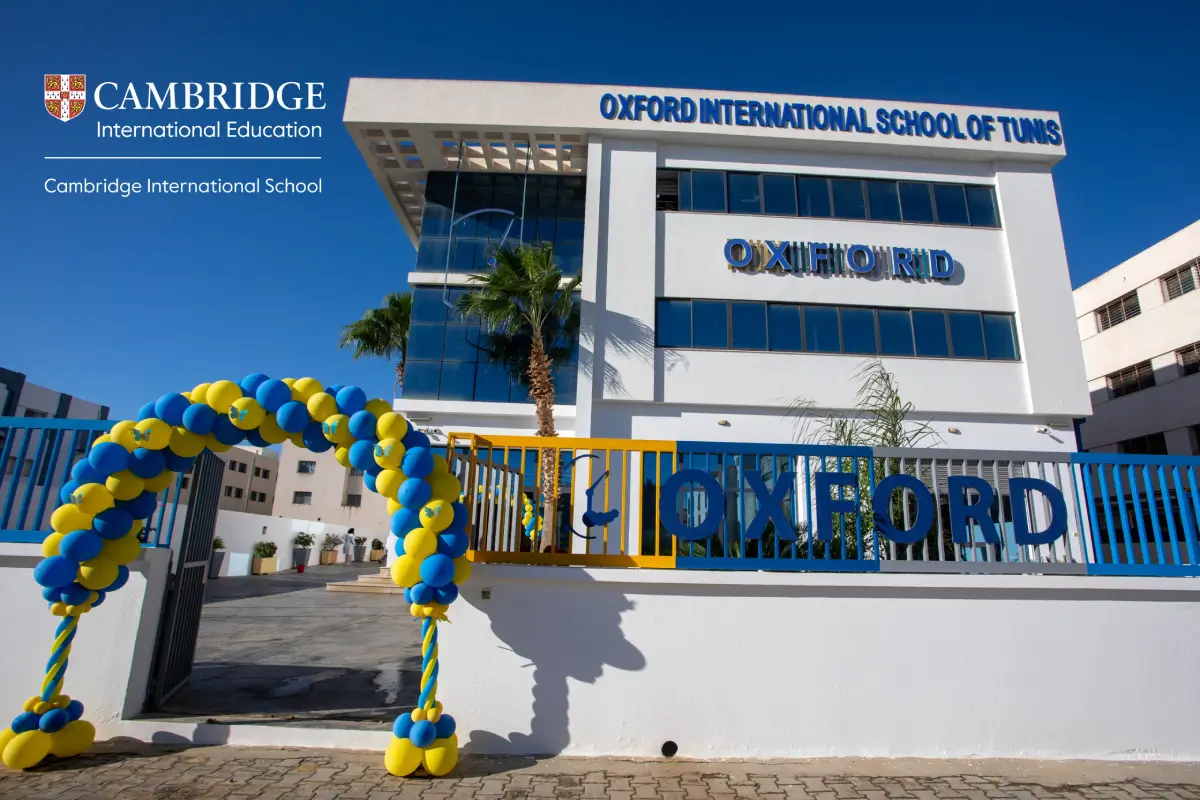
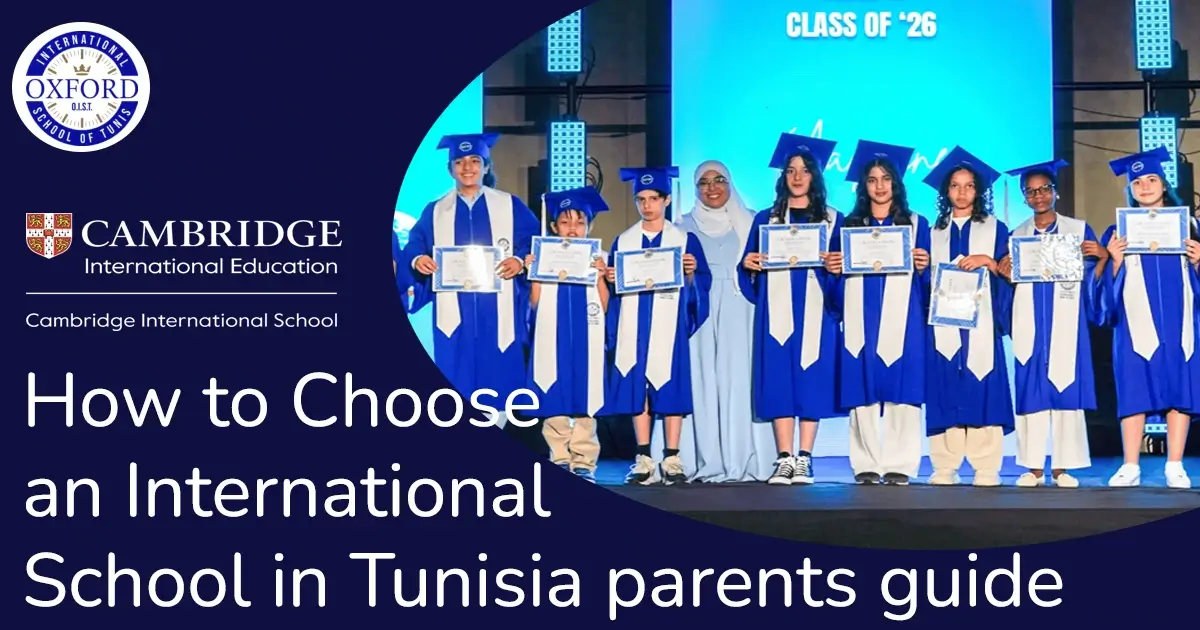
Oxford International School of Tunis combines an international school environment with a Cambridge educational pathway.
The school offers:
Cambridge Curriculum
A structured pathway from Early Years through Cambridge IGCSE and A Levels.
English-Medium Education
Students learn within an English-medium academic environment.
International Outlook
Students are exposed to different perspectives and encouraged to develop a broader understanding of the world.
Student-Centred Learning
The focus extends beyond academic knowledge to communication, independence, critical thinking and personal development.
A Connected Educational Journey
Families can plan their child’s education across multiple Cambridge stages within the same school environment.
Is OIST the Right International School for Your Child?
There is no universal answer to the question of which school is “best”.
The right school depends on the individual child and family.
OIST may be worth exploring if you are looking for:
- A Cambridge school in Tunis
- An English-medium international education
- A pathway from Early Years to A Levels
- Cambridge IGCSE and A Level preparation
- A balance between academic learning and broader student development
- An international environment in Tunisia
The best way to determine whether OIST is the right fit is to learn more about the school, speak with the Admissions team and experience the environment for yourself.
Frequently Asked Questions
What is the best international school in Tunis?
There is no single school that is best for every child. Parents should compare curriculum, language, educational pathway, teachers, student support, location, admissions and the overall learning environment.
Which schools in Tunisia offer Cambridge?
Several international schools in Tunisia offer Cambridge programmes, but the stages and subjects available differ between schools. Parents should verify the current Cambridge programmes offered by each school.
Is Cambridge better than the Tunisian curriculum?
They are different educational approaches designed around different structures and objectives. The appropriate choice depends on the student’s learning needs, family priorities and future educational plans.
Is Cambridge IGCSE suitable for international university applications?
Cambridge IGCSE is an internationally recognised qualification accepted by many educational institutions. However, university admission requirements vary, so students should check the requirements of their intended universities.
What comes after IGCSE?
Students can progress to Cambridge International AS & A Levels or another appropriate post-16 educational pathway.
What age can children start at an international school?
International schools offer different entry ages. The Cambridge Pathway begins with Cambridge Early Years from around age 3, while Cambridge Primary typically begins from around age 5.
Ready to Discover OIST?
Choosing an international school is a decision about your child’s next few years — and potentially the foundations of their future.
Rather than relying only on rankings, advertisements or online comparisons, take the opportunity to experience the school yourself.